Chimney fire warning signs
A fast chimney fire is loud and obvious: a roar like a passing train, popping and cracking, dense smoke and a strong hot smell. A slow-burning one can go completely unnoticed, and is only found later from the damage it leaves. If you think your chimney is on fire, get everyone out and call 911.
Signs of a chimney fire in progress
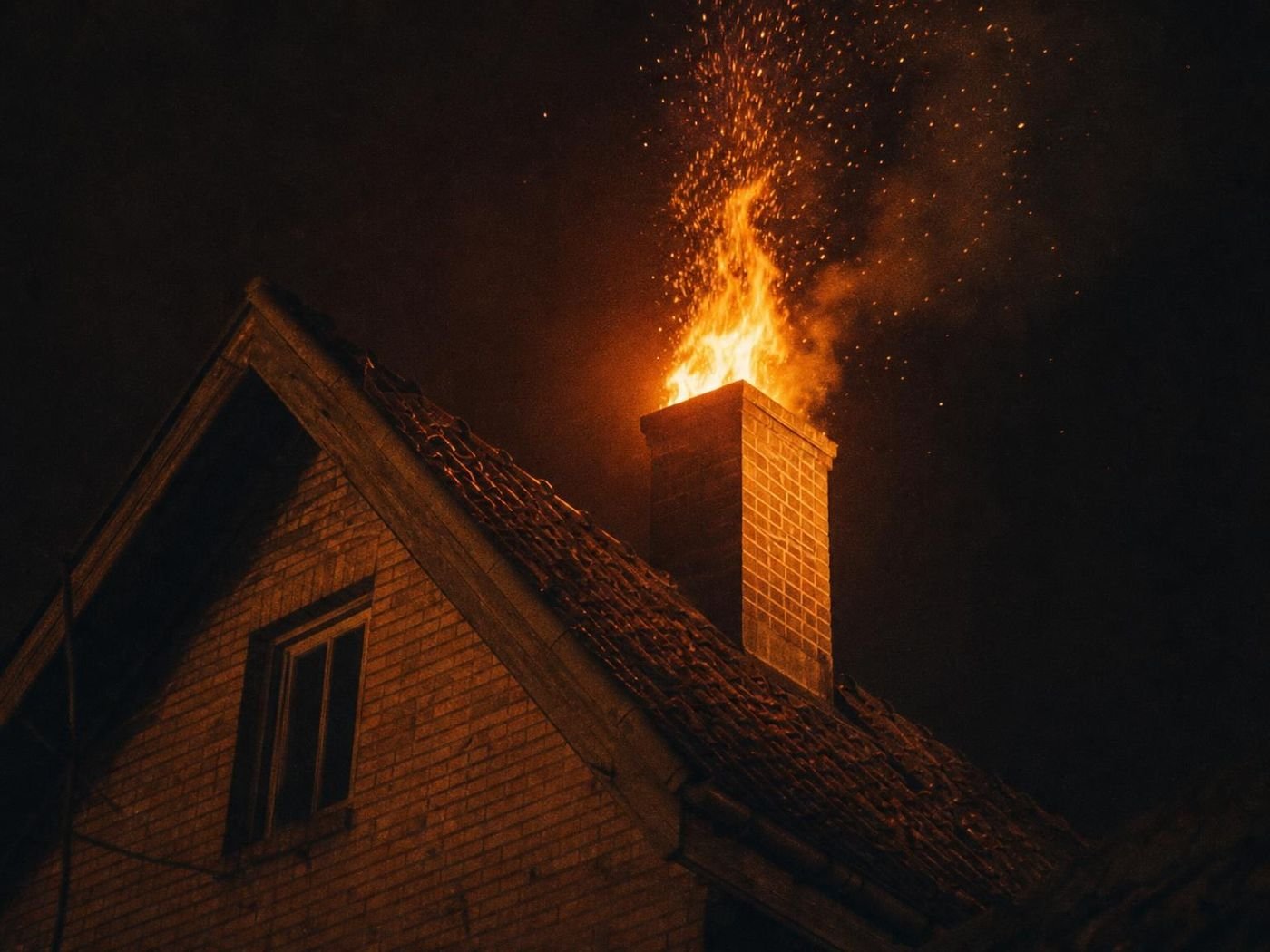
Most chimney fires are creosote igniting inside the flue. When there's enough fuel and air, they can burn fast and very hot. People who've been through one describe a few things that are hard to mistake:
- A loud roaring or rumbling, often compared to a freight train or a low-flying plane, from the chimney rather than the fire
- Loud popping and cracking, well beyond the normal crackle of burning wood
- A lot of dense smoke, sometimes pouring back into the room or out of the top of the chimney
- An intense, hot, tar-like smell
- Flames or sparks shooting from the top of the chimney, which neighbors sometimes notice first
- A stove pipe or chimney breast that's much hotter than usual, or a stovepipe glowing red
Normal fire or chimney fire?
A healthy fire makes noise and smoke too, so it helps to know the difference. The key is that a chimney fire is happening above the firebox, in the flue.
| Sign | Normal fire | Possible chimney fire |
|---|---|---|
| Sound | Gentle crackle and hiss from the logs | Deep roar or rumble from the chimney, loud popping |
| Smoke | Goes up the flue; a light plume outside | Thick, dark smoke, sometimes back into the room |
| Smell | Wood smoke | Intense, hot, tar-like smell |
| Chimney top | No visible flame | Flames or sparks shooting out |
If you're not sure, treat it as a chimney fire. Getting out and calling 911 for a false alarm costs nothing compared with the alternative.
The fires nobody notices
Not every chimney fire is dramatic. A slow-burning fire may not have enough air or fuel to roar. It smolders inside the flue, sometimes for a while, and burns itself out. Nobody hears it. The household keeps using the fireplace, not knowing that the flue is now damaged.
These quiet fires can still reach temperatures high enough to crack clay tiles and damage the chimney. That's a real hazard, because the next fire in a cracked flue can send heat and sparks into the wood framing around the chimney. It's also why the clues afterwards matter so much.
Signs a chimney fire has already happened
These are the signs a chimney professional looks for during an inspection. Some of them you can spot yourself.
- Puffy, "honeycombed" creosote. Creosote that has burned expands into a bubbly, crusty, lightweight texture, a bit like burnt popcorn, very different from flat flakes or glaze.
- A warped damper or metal smoke chamber parts, or a damper that no longer closes properly.
- Cracked, broken or missing flue tiles, or pieces of tile in the firebox or at the base of the chimney.
- A discolored or distorted chimney cap, or metal chimney parts that have changed color.
- Creosote flakes and pieces on the roof, in the gutters or on the ground around the chimney.
- Heat damage to the roof around the chimney, or a damaged TV antenna or other fixture attached to it.
- Cracks in the outside masonry, or smoke escaping through the brick or mortar joints.
Some of these, like a warped damper or a crack in the outside brick, can have other causes. An inspection will tell you which.
What to do if you suspect a chimney fire
- Get everyone out, including pets, and close doors behind you if it's quick to do so.
- Call 911 from outside. Tell them you think it's a chimney fire.
- Only if it's instant and safe on your way out: closing a stove's air control or a fireplace's glass doors cuts off air to the fire. Never stay behind to do it.
- Don't go back in until the fire department says it's safe.
- Don't use the fireplace or stove again until the chimney has been inspected.
After a chimney fire
NFPA 211, the national standard for chimneys, calls for a Level 2 inspection after a chimney fire or any event that may have damaged the chimney. That means a video scan of the full length of the flue, not just a look up from the fireplace, because cracked tiles and liner damage are often out of sight.
Depending on what's found, the fix might be a sweep and a damper repair, replacement of some flue tiles, or a new stainless steel chimney liner. If you plan to make an insurance claim, photos and a written report help. Your insurer can tell you what they need. Our chimney inspection page explains what a Level 2 covers.
How to prevent a chimney fire
- Inspect every year and sweep as needed. That's the NFPA 211 standard, and it's the single most effective step. See how often to sweep.
- Burn only dry, seasoned firewood. Wet wood makes more smoke and more creosote.
- Burn hot, well-fed fires. Avoid long, smoldering burns with the air turned down.
- Never burn trash, cardboard, gift wrap or a Christmas tree. They flare up fast and send burning debris up the flue.
- Keep a cap on the chimney to keep out nests and debris, which can catch fire too.
- Learn the stages of creosote. Glazed creosote is the most dangerous. Our guide to the three stages of creosote shows what to look for.
The bottom line
- Roaring, popping, dense smoke and a hot smell are the signs of a chimney fire in progress. Get out and call 911.
- Slow chimney fires can go unnoticed. Puffy creosote, cracked tiles, a warped damper and a discolored cap are the clues.
- Don't use the fireplace again until the chimney has had a Level 2 inspection.
- Yearly inspections, dry wood and hot fires prevent most chimney fires.
Common questions
How do I know if I've had a chimney fire?
Can a chimney fire go out on its own?
Is it safe to use my fireplace after a chimney fire?
Do chimney fire extinguisher products work?
Related guides & services
The three stages of creosote
The fuel behind most chimney fires, and how to tell how much you have.
Read the guide ServiceChimney inspections
Level 2 camera inspections after a chimney fire, with a written photo report.
See the service ServiceChimney sweeping
Remove creosote before it becomes fuel, with a Level 1 inspection included.
See the serviceReady when you are.
Book online in about a minute, or call and talk to a real person. We confirm your 2-hour arrival window by text.