
Is your dryer vent a fire risk?
It can be. Lint that escapes the lint screen builds up inside the vent, restricts airflow and makes the dryer run hotter, and lint burns easily. The U.S. Fire Administration names failure to clean as the leading factor in home clothes dryer fires. Clean the screen every load and the vent at least once a year.
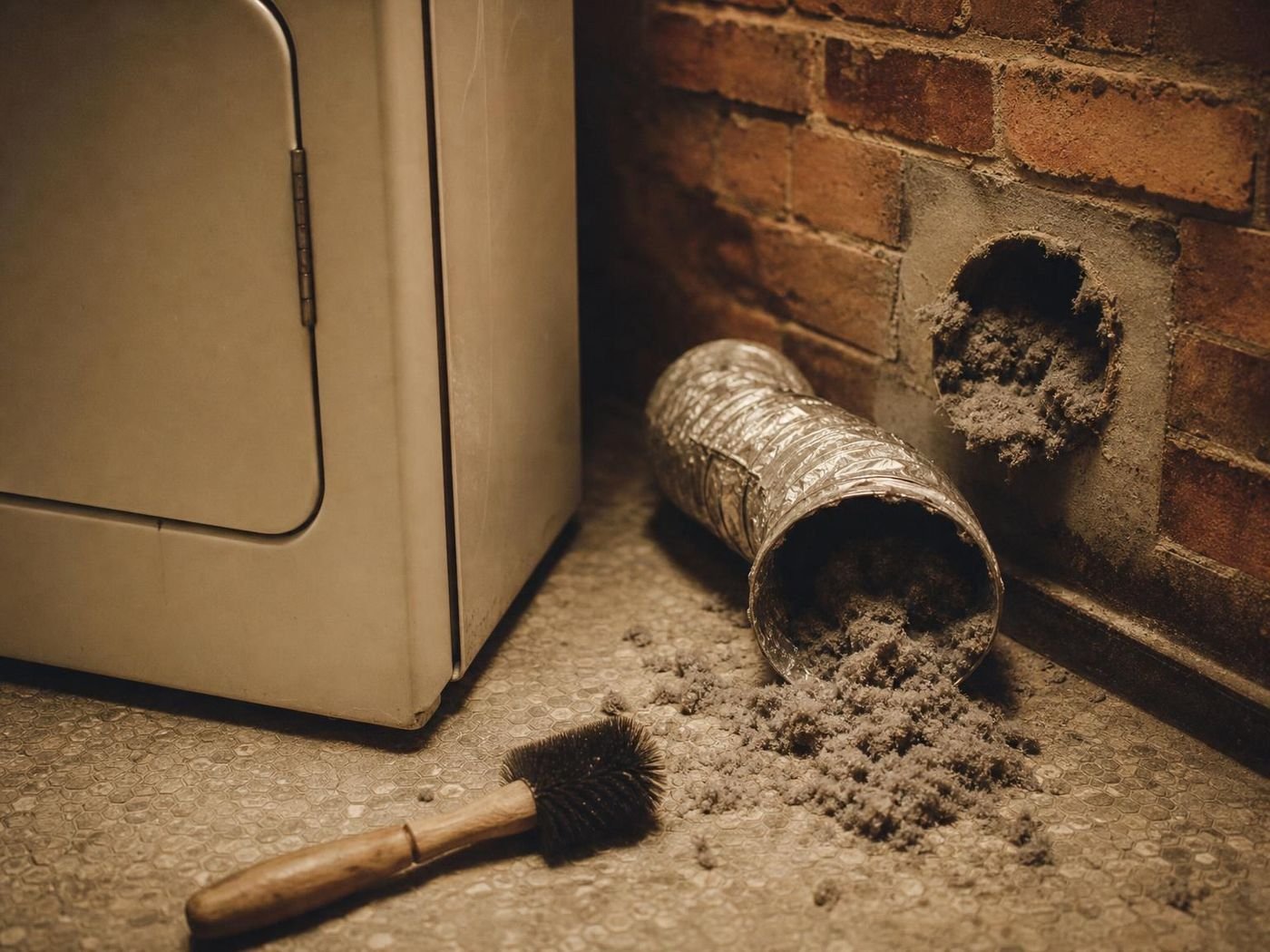
Why lint is a fire risk
A dryer works by pushing hot air through your clothes and out of the house. The lint screen catches most of the fibers that come loose, but not all of them. The rest ride the air into the vent duct and settle along the way, especially at bends, in sagging sections and at the outside hood.
As that lint builds up, two things happen. The airflow slows, so the dryer runs hotter and longer to get clothes dry. And the lint itself, a fine, dry, fluffy fiber, is very easy to ignite. Heat plus fuel plus restricted airflow is the combination behind most dryer fires.
The U.S. Fire Administration and the NFPA both point to the same thing: failure to clean is the leading factor in home clothes dryer fires. It's also one of the easiest fire risks in a house to fix.
Warning signs of a clogged vent
- Clothes take longer to dry, or need a second cycle
- The dryer or the clothes are unusually hot at the end of a cycle
- A burning or hot smell when the dryer runs
- The laundry room gets humid or warm while the dryer is on
- The outside vent flap doesn't open, or barely moves, with the dryer running
- Lint collecting around the lint screen housing, behind the dryer or around the outside hood
- Birds or nesting material at the outside vent
- It's been more than a year, or you don't know when the vent was last cleaned
Where lint builds up
Most vents have the same weak spots, whether they run a few feet through a basement wall or up through the attic to the roof.
- The lint screen housing inside the dryer, where lint slips past the screen and collects below it.
- The transition duct behind the dryer, especially if it's crushed, kinked or longer than it needs to be.
- Elbows and sagging sections, where the air slows down and lint settles.
- The outside hood and flap, where lint and nests can block the exit. Roof-top hoods are the hardest to check.
What a safe vent run looks like
A lot of dryer vent problems come down to how the vent was installed. Check your dryer's installation manual, but a safe run generally has these features:
- Metal duct. Rigid metal for the run through walls and ceilings, with smooth insides. Plastic and thin foil accordion ducts crush easily and trap lint, and most dryer manufacturers and building codes don't allow them.
- A short, uncrushed transition behind the dryer, using a connector the dryer manufacturer approves.
- As short and straight as possible. The International Residential Code, the model code most U.S. building codes are based on, limits a standard dryer duct to 35 feet, minus allowances for each bend, unless the dryer manufacturer allows a longer run.
- Joints taped or clamped, not screwed. Screws poking into the duct catch lint.
- Ends outdoors. Never into an attic, crawlspace, garage or wall cavity.
- A hood with a working flap that opens when the dryer runs and closes when it stops, and no screen over the opening, since screens catch lint. If birds are a problem, use a guard designed for dryer vents.
How often to clean it
| What | How often |
|---|---|
| Lint screen | Before or after every load |
| Lint screen wash | Every few months with warm soapy water, if dryer sheets leave a film |
| Full vent duct | At least once a year is a common recommendation |
| Sooner if… | Large household, long or roof-top runs, pets, or any warning sign above |
Long runs, vents that go up to the roof and runs with several elbows clog faster and are harder to clean yourself. These are common in townhouses and in homes where the laundry is in the middle of the house or the basement.
Doing it yourself, or a professional cleaning
For a short, straight run through an outside wall, a dryer vent brush kit can do a reasonable job. Unplug the dryer first (and for a gas dryer, follow the manual before moving it, so you don't strain the gas connection), pull it out carefully, and brush from both ends.
A professional cleaning makes sense for long or roof-top runs, vents with several bends, or when you're still seeing warning signs after cleaning. Whoever does it, a thorough job covers the whole system, from the dryer to the outside hood:
- The transition duct behind the dryer, checked for crushing and replaced if it's plastic, foil or damaged.
- The full length of the duct, brushed or air-cleaned from end to end, including every elbow.
- The lint screen housing inside the dryer, where lint collects below the screen.
- The outside hood, cleared of lint and nests, with the flap opening and closing freely.
- An airflow check before and after, so you can see the difference it made.
Roof-top terminations deserve special attention. Lint tends to pile up under roof caps, they're popular with nesting birds, and they're hard to check from the ground.
Gas dryers and carbon monoxide
A gas dryer burns natural gas or propane to make heat, and its exhaust carries combustion gases, including carbon monoxide. If the vent is blocked or disconnected, those gases can end up in the house. That's one more reason to keep the vent clear, check that the duct is connected behind the dryer, and have a working carbon monoxide alarm on every level of the home.
Everyday habits that help
- Clean the lint screen every load.
- Don't run the dryer when you're asleep or out of the house.
- Keep the area around the dryer clear of boxes, laundry piles and anything that burns.
- Don't dry things stained with flammable substances like gasoline, cooking oil or cleaning solvents. Follow the label.
- Look at the outside flap now and then while the dryer is running.
The bottom line
- Failure to clean is the leading factor in home dryer fires, according to the U.S. Fire Administration.
- Long drying times, heat and a burning smell are the warning signs.
- Metal duct, short runs, a working flap and no screens make a safe vent.
- Clean the screen every load and the vent at least once a year.
Common questions
How often should a dryer vent be cleaned?
How do I know if my dryer vent is clogged?
Can I use a plastic or foil flexible duct?
Does a clogged dryer vent waste energy?
Related guides & services
Dryer vent cleaning
Full-length vent cleaning, airflow testing and bird guards.
See the service SafetyChimney fire warning signs
The other household fire risk that builds up out of sight.
Read the guide MaintenanceGas fireplace maintenance
Venting, carbon monoxide and what a yearly gas fireplace check covers.
Read the guideReady when you are.
Book online in about a minute, or call and talk to a real person. We confirm your 2-hour arrival window by text.