
Does a gas fireplace need maintenance?
Yes. Gas burns cleaner than wood, but a gas fireplace and its vent should still be inspected once a year. The main risks aren't soot. They're blocked vents, misplaced logs, worn parts and carbon monoxide.
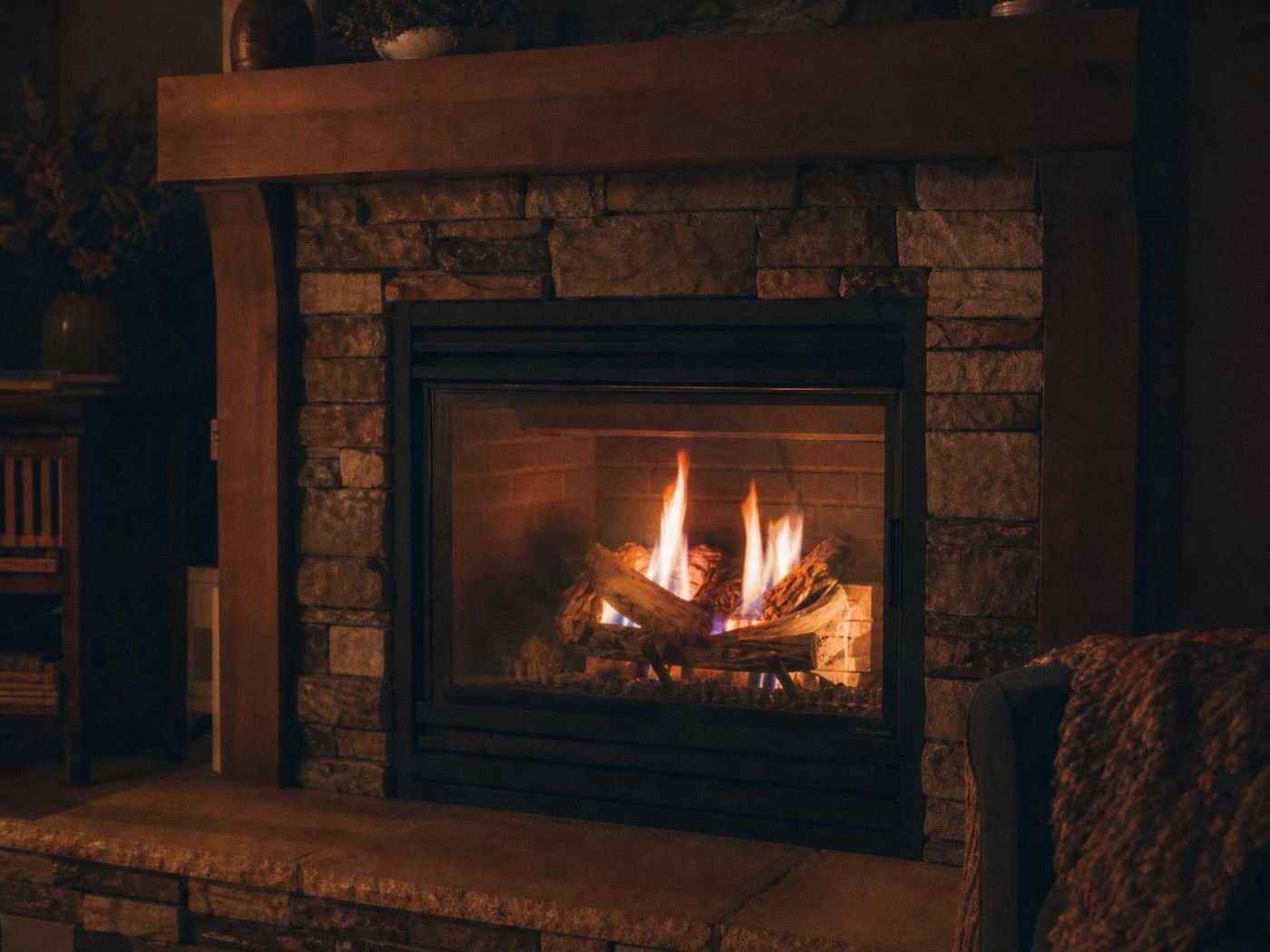
Why gas fireplaces need a yearly check
It's easy to think of a gas fireplace as an appliance you can switch on and forget. In daily use it mostly is. But NFPA 211, the national standard for chimneys, fireplaces and vents, calls for an annual inspection whatever the fuel, and most gas fireplace manufacturers call for yearly service by a qualified technician in the owner's manual.
The reason is venting. A gas fireplace makes carbon monoxide, water vapor and other combustion gases, just as a furnace does. As long as the vent is clear, sealed and the burner is set up correctly, those gases go outside. If a bird nests in the vent, a joint separates, the logs get moved or the glass seal fails, they can come back into the room.
Know which kind you have
"Gas fireplace" covers several quite different appliances. The owner's manual or the label near the controls will tell you which one you have.
| Type | How it vents | What to watch |
|---|---|---|
| Direct-vent | Sealed glass front. A two-layer pipe through the wall or roof brings outside air in and sends exhaust out | Vent cap blocked by snow, plants or nests; glass and gasket condition |
| B-vent (natural vent) | Uses room air and sends exhaust up a metal vent pipe by natural draft | Draft, vent pipe joints, blockages |
| Vented gas logs | Sit in a masonry fireplace and vent up the existing chimney | The damper must stay fixed open; chimney condition, nests, liner |
| Vent-free logs or fireplace | No vent. Combustion gases and moisture stay in the room | Follow the manual exactly; oxygen sensor; room size limits |
What a yearly service covers
Exactly what's checked depends on the unit and its manual, but a good gas fireplace service looks at the whole system:
- Vent and termination: clear of nests, debris and plants, joints sealed, cap undamaged.
- Chimney and liner, for gas logs or inserts in a masonry fireplace.
- Glass and gasket: no cracks, seated properly, cleaned with the right product.
- Logs and embers placed exactly as the manufacturer's diagram shows.
- Burner, pilot and ignition: cleaned, lighting reliably, flame looking right.
- Gas connections checked for leaks.
- Damper fixed open where required, for vented gas logs.
- Carbon monoxide alarm nearby and working.
What you can safely do yourself
- Keep the outside vent clear. After a heavy snow, check that drifts haven't covered a wall-mounted cap, and keep shrubs and mulch away from it.
- Test your CO alarms monthly and replace them on the schedule printed on the alarm.
- Clean the glass only when it's cold, using the cleaner the manufacturer recommends. A light white haze is a normal combustion deposit. Ordinary household glass cleaners aren't made for it and can damage some fireplace glass.
- Dust the vents and controls around the unit, and keep the area in front of it clear.
- Keep the safety screen on. The glass on a gas fireplace gets hot enough to cause serious burns, which is why newer units come with a mesh barrier.
Leave gas lines, valves, burners and log placement to a qualified technician. Moving logs even slightly can make the flame hit them, which creates soot and can increase carbon monoxide.
Warning signs to act on
Turn the fireplace off and have it looked at if you notice:
- Black soot on the glass, the logs or the wall above the opening
- A change in the flame: much taller, lazier, lifting off the burner or very different in color from what it used to be
- A pilot light that keeps going out, or a fireplace that won't light
- Condensation running down the inside of the glass after the first few minutes
- A smell that lingers beyond the brief "new" smell some units give off at the start of the season
- Your carbon monoxide alarm going off, even once
Gas logs in an old masonry fireplace
Many Pittsburgh homes have a gas log set in what was once a wood-burning fireplace. Two things matter here. First, vented gas logs need the damper fixed partly or fully open, usually with a clamp, so it can't be closed while the logs are on. Second, the chimney above them is still a chimney. It still needs a yearly inspection for nests, crumbling tile and water damage, and it may need a liner sized for gas. Gas exhaust is full of water vapor, and in a cold, oversized flue it condenses and slowly breaks down old mortar and tile. More on that is in our guide to chimney leak signs.
A word on vent-free units
Vent-free logs and fireplaces release their combustion gases and moisture into the room. They're designed with oxygen-depletion sensors and limits on room size and run time, and they have to be used exactly as the manual says. If you have one, be strict about the manual, keep a CO alarm nearby, and have the unit serviced every year. If you're choosing a new unit, a vented model avoids the question.
The bottom line
- Inspect a gas fireplace every year, along with its vent or chimney.
- Keep the outside cap clear, especially after snow.
- Soot, flame changes and condensation are reasons to call, not to wait.
- Have working CO alarms and leave gas parts to a qualified technician.
Common questions
How often should a gas fireplace be serviced?
Does a gas fireplace chimney need to be swept?
Why is there a white film on my gas fireplace glass?
Can I leave my gas fireplace on all night?
Related guides & services
Fireplace & stove service
Gas fireplaces, inserts, logs, dampers, and wood and pellet stoves.
See the service MaintenanceHow often to sweep
Inspection and cleaning schedules for wood, gas, oil and pellet flues.
Read the guide ServiceChimney liners
Correctly sized stainless liners for gas logs, inserts, furnaces and water heaters.
See the serviceReady when you are.
Book online in about a minute, or call and talk to a real person. We confirm your 2-hour arrival window by text.