
Is your chimney leaking?
The most common signs are water stains on the ceiling or wall beside the chimney, a damp or musty smell from the fireplace, and rust or dripping inside the firebox. Most leaks come from one of five places: flashing, crown, cap, the brick itself, or a missing cricket.
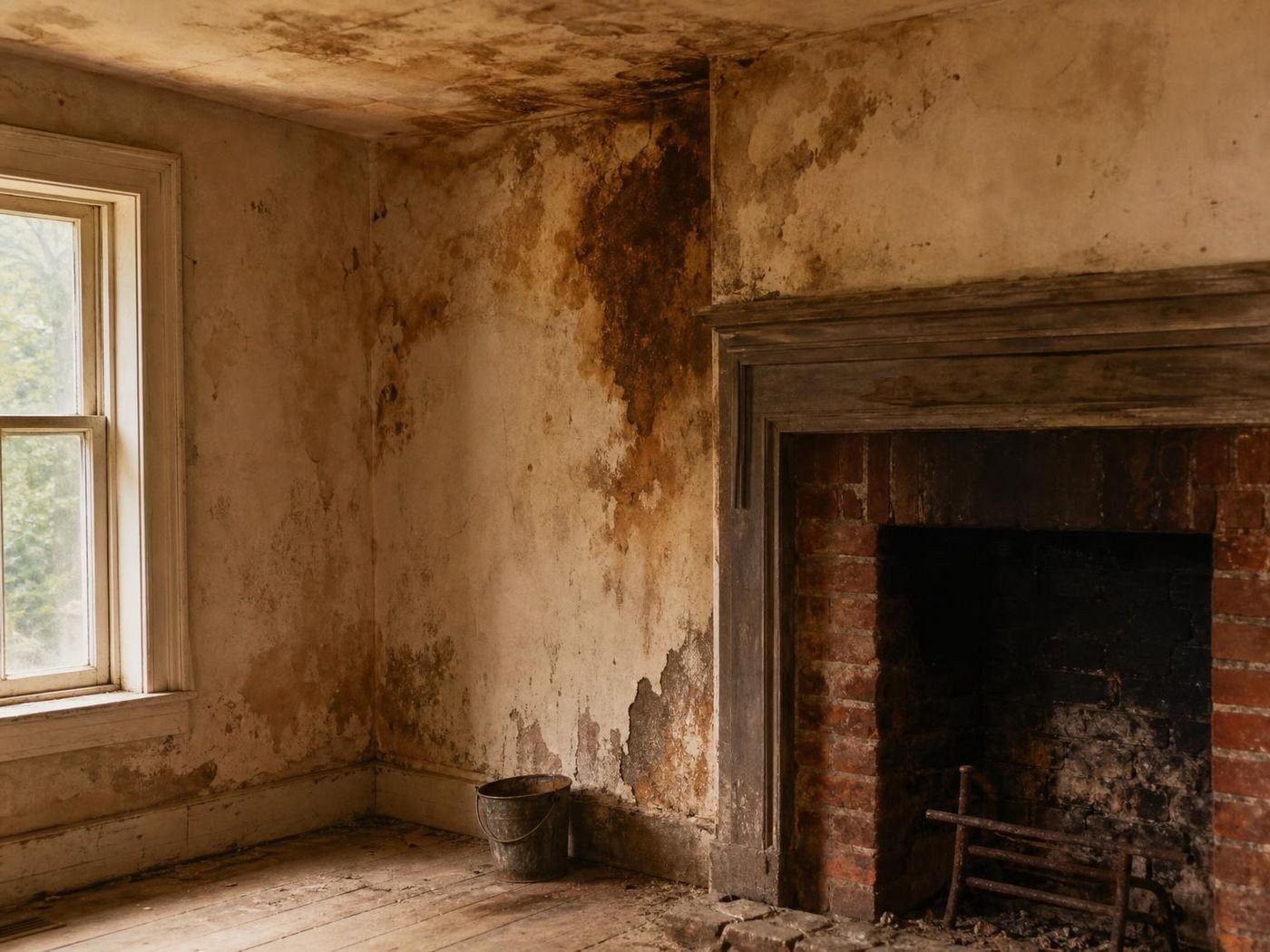
Signs inside the house
Chimney leaks rarely announce themselves with a steady drip. More often, you notice the damage a little at a time. Look for:
- Stains on the ceiling or walls next to the chimney, often tan or brown rings that grow after storms
- A damp, musty smell from the fireplace, usually stronger after rain or in humid weather
- Water in the firebox, or a damper, firebox floor or glass door frame that's rusting
- Peeling paint or bubbling wallpaper on the chimney breast
- White, chalky deposits on interior brick, called efflorescence, left behind when water evaporates and leaves salts behind
- Damp wood or insulation in the attic around the chimney
- Bits of tile or mortar falling into the fireplace
Signs outside
From the ground, a pair of binoculars will show you a lot. Look at the chimney where it comes through the roof and at the top:
- Brick faces flaking or popping off (spalling), or bits of brick in the gutters
- Mortar joints that look sunken, sandy or open
- White staining on the outside brick
- Flashing that's bent, lifted or smeared with patches of tar
- A rusted, damaged or missing chimney cap
- Cracks in the crown, the concrete or mortar slab on top
Where the water gets in
Water stains show up where water ends up, which isn't always where it got in. Water can travel along rafters, down the outside of the flue or through the brick before it shows. Here are the usual entry points, from most to least obvious.
| Entry point | What to look for | Usual fix |
|---|---|---|
| 1. Cap | Rusted, damaged or missing cap; rust on the damper | New stainless or copper cap |
| 2. Crown | Cracks in the slab on top of the chimney | Crown repair or rebuild |
| 3. Brick & mortar | Flaking brick faces, sunken or sandy joints, white staining | Repointing and brick repair, then a breathable repellent |
| 4. Flashing | Bent or lifted metal, patches of tar or caulk | Step and counter-flashing done properly |
| 5. Cricket | A wide chimney with water and snow piling up on the uphill side | Add a cricket (saddle) behind the chimney |
1. Missing or damaged cap
Without a cap, the top of your flue is an open hole in the roof. Rain falls straight down it, rusting the damper, soaking the smoke chamber and wearing down the mortar between flue tiles. A cap is the simplest fix on this list. Read more about what a chimney cap does.
2. Cracked crown
The crown is the slab on top of the chimney that sheds water away from the flue. Many crowns are built from ordinary mortar, which cracks as it ages and goes through freeze-thaw cycles. Water gets into the cracks, freezes, and opens them wider each winter. A well-built crown slopes away from the flue and overhangs the brick so water drips clear of the chimney instead of running down its face. See crown repair and rebuilds.
3. Porous brick and open mortar
Brick and mortar are porous. They absorb rain, especially on the side that faces the weather. As mortar joints wear away, they let in more. In older chimneys, a lot of water can come straight through the masonry. Repointing the joints (often called tuckpointing) and replacing damaged brick come first. A breathable, vapor-permeable water repellent can then help. Avoid paint or non-breathable sealers, which trap moisture inside the brick. Our masonry repair page explains the options.
4. Failed flashing
Flashing is the metal that seals the joint between the chimney and the roof. It's one of the most common leak sources. Good flashing is two layers: step flashing woven in with the shingles, and counter-flashing set into the mortar joints and lapped over it. Flashing that was only caulked or tarred to the face of the brick tends to fail as the sealant dries out and cracks. Roof replacements are another common cause, when the flashing is reused or disturbed.
5. No cricket on a wide chimney
On the uphill side of a chimney, water and snow pile up against the brick. On wider chimneys, a cricket (also called a saddle) splits that water around the chimney. Residential building codes generally require one when a chimney is more than 30 inches wide and doesn't sit at the roof's peak. Many older chimneys were built without one.
Not a leak: condensation
Sometimes water in a chimney doesn't come from rain at all. Gas furnaces and water heaters produce water vapor. If their flue is too large or too cold, that vapor condenses inside the chimney. A common case in older homes is a house that upgraded to a high-efficiency furnace vented through the wall, leaving the water heater alone in a big old chimney flue. Signs include moisture or white staining near the base of the chimney, and crumbling tiles, often worst in winter. The fix is usually a properly sized liner, not roof work.
What to do right now
- Catch the water and protect floors and furniture.
- Take dated photos of stains each time they appear or grow, and note the weather: wind-driven rain, a long soaking rain or melting snow. That pattern helps pinpoint the source.
- Don't seal the masonry yourself with roofing tar, caulk or paint. It often hides the source and can trap moisture in the brick.
- Hold off on fires if you see rust, crumbling tile or debris in the firebox, until someone has checked the flue.
How a leak is diagnosed
A proper leak diagnosis looks at the whole chimney, not just the stain. We check the cap, crown, brick, mortar and flashing from the roof, look at the attic side where we can get to it, and inspect the flue for water damage. Where it's useful, we run a camera down the flue. You get photos of what we found and a free written estimate for the repair.
The usual fixes are proportional to the problem. A missing cap or failed counter-flashing can be a small job. Widespread spalling above the roofline may mean rebuilding part of the chimney. Our leak repair and waterproofing page covers how we approach it.
Why it's worth fixing soon
A small leak gets bigger in a climate like ours. Water that soaks into brick and mortar freezes, expands and cracks it a little more every winter. That's freeze-thaw damage, and it turns a repointing job into a rebuild over a few seasons. Meanwhile, water inside the house can rot framing, ruin drywall and encourage mold growth, and water inside the flue rusts dampers and breaks down clay tiles.
The bottom line
- Stains, musty smells, rust and white deposits near the chimney are the common signs of a leak.
- Flashing, crown, cap, brick and cricket are where water usually gets in. Condensation can look like a leak too.
- Don't tar or paint over it. Find the source, then fix it properly.
- Fix it before winter, when freeze-thaw cycles make every leak worse.
Common questions
Why does my chimney only leak in heavy rain?
Can a chimney leak be fixed from the inside?
Is a chimney leak a roofing problem or a chimney problem?
Should I waterproof my chimney?
Related guides & services
Leaks & waterproofing
Leak diagnosis, flashing repair and breathable water repellent for masonry chimneys.
See the service RepairsFreeze-thaw chimney damage
How Pittsburgh winters break down brick and mortar, and how to stop it early.
Read the guide RepairsWhy a chimney cap matters
What a cap does, how it differs from the crown and flashing, and which type to choose.
Read the guideReady when you are.
Book online in about a minute, or call and talk to a real person. We confirm your 2-hour arrival window by text.