
How freeze-thaw damages chimneys
Brick and mortar soak up water. When that water freezes, it expands and pushes the masonry apart from the inside, a little more each time the temperature swings past freezing. Over a few Pittsburgh winters, that turns small cracks into flaking brick, open joints and a crumbling crown.
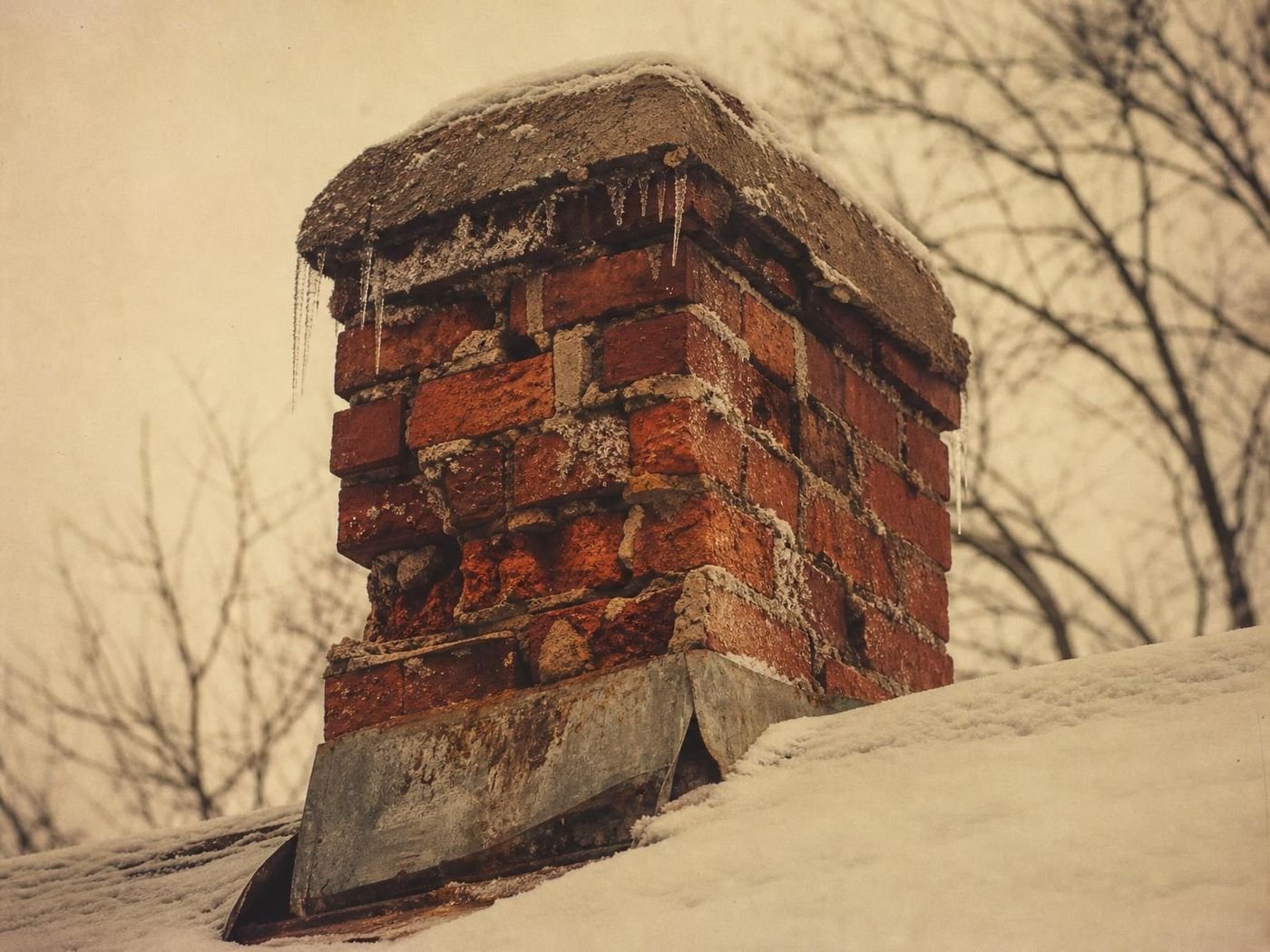
How the freeze-thaw cycle works
Masonry looks solid, but brick, mortar and concrete are full of tiny pores. They absorb rain and melting snow like a very slow sponge. That on its own does little harm. The trouble starts when the water inside them freezes.
Water expands by about 9% when it turns to ice. Inside a brick or a mortar joint, there's nowhere for it to go, so it pushes outward on the material around it. Then it thaws, the crack it opened fills with more water, and the next freeze pushes a little further. Repeat that across a winter and you get the damage most Pittsburgh chimneys eventually show.
One cycle, step by step:
- Water soaks in. Rain and snowmelt fill the pores in brick, mortar and the crown.
- It freezes. The ice expands by about 9% and presses outward.
- The masonry cracks. Joints open and brick faces start to flake off (spalling).
- It thaws. The bigger cracks take in more water, ready for the next freeze.
Each loop opens the masonry a little further, so damage speeds up once it starts.
Why Pittsburgh chimneys get it worse
Freeze-thaw damage happens anywhere winters hover around freezing, and Western Pennsylvania winters do a lot of hovering. Instead of freezing hard in December and staying frozen until March, temperatures here often swing above and below 32°F again and again, with rain, snow and melt in between. Each swing is another cycle.
A few local factors add to it:
- Older brick housing. Much of the area's housing stock is older brick, and many chimneys have been through decades of winters.
- Softer historic materials. Older brick and lime-based mortar are generally softer and more absorbent than modern materials.
- Exposure. The part of a chimney above the roofline is the most exposed masonry on a house, with weather on every side and nothing to shelter it.
Early signs to look for
You can check most of these from the ground with binoculars, or from a window that looks onto the roof.
- Spalling: brick faces flaking, peeling or popping off, leaving rough, pitted brick
- Brick fragments on the roof, in the gutters or on the ground below the chimney
- Mortar joints that are recessed, sandy, cracked or missing in places
- Cracks in the crown, the concrete or mortar slab on top
- White staining (efflorescence), a sign that water is moving through the masonry
- A chimney that looks like it's leaning, or has gaps where it meets the roof
- Inside: water stains near the chimney, a rusty damper, or bits of tile in the firebox
Where the damage starts
The crown
The crown takes the most direct weather of any part of the chimney. Many are built from ordinary mortar, which isn't designed to be a weather surface, and it cracks with age. Once water gets into the crack, freeze-thaw widens it and water reaches the brick and flue below. A sound crown slopes away from the flue and overhangs the brick with a drip edge, so water falls clear instead of running down the chimney face.
Mortar joints
Mortar is meant to be softer than the brick around it, and to wear first. As it erodes, joints open up, more water gets in, and the brick around them starts to suffer.
Brick faces
When water trapped just behind a brick's face freezes, it can push the face off. That's spalling. The rough, exposed brick underneath absorbs even more water.
The flue
Water that gets into the chimney can damage the clay flue tiles and the mortar between them. Cracked tiles are a safety issue, because the flue is what keeps heat and exhaust away from the house.
How it's repaired
The right repair depends on how far the damage has gone. Caught early, it's usually maintenance. Left for years, it can mean rebuilding.
| What's wrong | Typical repair |
|---|---|
| Worn or open mortar joints | Repointing (tuckpointing): grinding out failed mortar and packing in new |
| Spalled or broken bricks | Replacing individual bricks with a good match |
| Hairline crown cracks | Sealing with a flexible crown sealant made for the job |
| Badly cracked or flat crown | Rebuilding the crown with a slope, overhang and drip edge |
| No chimney cap | Installing a cap to keep rain out of the flue |
| Sound but thirsty brick | A breathable water repellent, after repairs are done |
| Widespread damage above the roof | Partial rebuild of the chimney from the roofline up |
Why the right materials matter
Two common mistakes make freeze-thaw damage worse, not better:
- Mortar that's too hard. On older, softer brick, repointing with a hard, modern cement-rich mortar can force moisture and stress into the brick instead of the joint, and the brick faces start to fail. Preservation guidance, including the National Park Service's guide to repointing historic masonry, recommends matching the new mortar to the old.
- Sealing the brick shut. Paint and non-breathable sealers stop water vapor escaping, so moisture gets trapped inside the brick where it can freeze. Water repellents for masonry should be vapor-permeable, so the brick can still dry out.
When to get it done
Mortar and concrete need mild weather to cure properly, so most masonry work is done from spring through fall. Winter repairs depend on the forecast. The best time to look for damage is right after winter, when the season's freeze-thaw has done its work, so repairs can be scheduled before the next one. If you see damage in the fall, get it looked at before it freezes.
What you can do to slow it down
You can't change the weather, but you can control how much water reaches your chimney:
- Keep gutters and downspouts clear, so water doesn't overflow onto brick or pool around the base of the chimney.
- Make sure there's a cap on every flue, so rain can't fall straight in.
- Trim overhanging branches that drip on the chimney and drop leaves on the crown.
- Look at the chimney each spring with binoculars, after the worst of the freeze-thaw season.
- Don't pressure-wash old brick. High pressure can strip the hard outer face from soft brick and blast out mortar, which lets more water in.
- Get a yearly inspection. A sweep's Level 1 inspection includes the visible exterior, crown and cap.
The bottom line
- Freeze-thaw is water freezing inside masonry and pushing it apart, a little more each cycle.
- Spalling brick, open joints and a cracked crown are the early signs.
- Early repairs are maintenance; late ones are rebuilds.
- Match the mortar and let the brick breathe. Hard mortar and sealers can make it worse.
Common questions
What is spalling brick?
Can freeze-thaw damage be repaired, or does the chimney need rebuilding?
Should I seal my brick chimney to keep water out?
Can chimney masonry be repaired in winter?
Related guides & services
Masonry & tuckpointing
Repointing, spalling brick repair and partial or full chimney rebuilds.
See the service RepairsSigns your chimney is leaking
Stains, smells and rust, and the five places water usually gets in.
Read the guide RepairsWhy a chimney cap matters
Cap, crown and flashing explained, and how a cap keeps water out of the flue.
Read the guideReady when you are.
Book online in about a minute, or call and talk to a real person. We confirm your 2-hour arrival window by text.