
Do you need a chimney cap?
For almost every chimney, yes. A cap is a metal hood with mesh sides that sits over the top of the flue. It keeps rain, animals and debris out, and stops sparks and embers from landing on your roof. It's one of the simplest ways to protect a chimney.
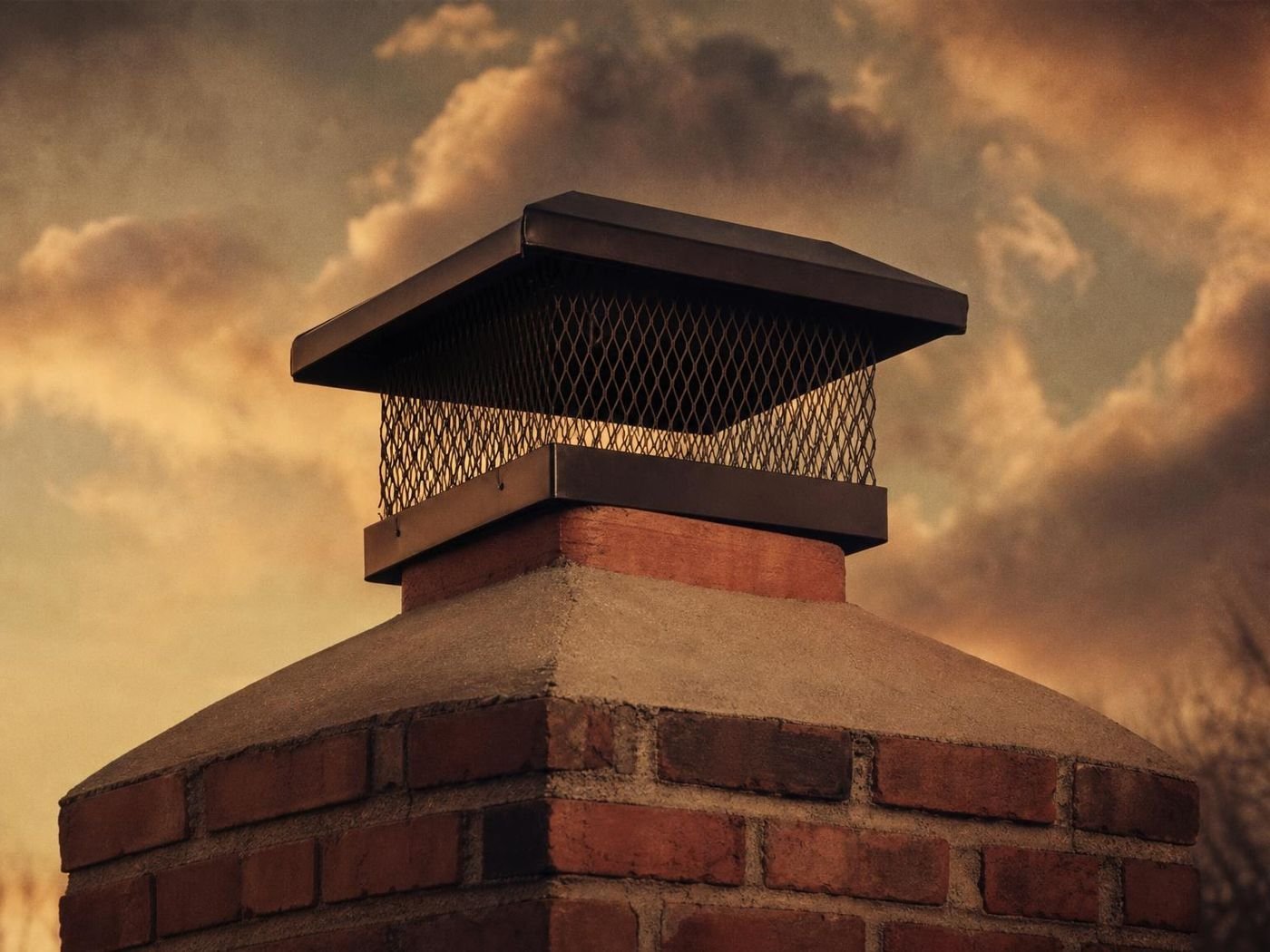
Cap, crown and flashing: what's what
These three get mixed up all the time, and they do different jobs. When a sweep tells you one of them needs attention, it helps to know which is which.
- Cap
- The metal hood over the flue opening, usually stainless steel or copper, with a solid top and mesh sides.
- Crown
- The concrete or mortar slab that covers the top of the brickwork around the flue. It sheds water away from the chimney.
- Flashing
- The metal that seals the joint where the chimney passes through the roof.
A cap protects the inside of the flue. It doesn't stop water getting in through a cracked crown, porous brick or failed flashing. For those, see signs your chimney is leaking.
What a chimney cap does
Keeps rain out of the flue
An uncapped flue is an open hole in your roof. Rain that falls down it rusts the damper and firebox parts, soaks the smoke chamber, and wears away the mortar between flue tiles. In winter, that water freezes and thaws inside the chimney. A cap is the simplest way to stop it.
Keeps animals out
Birds, squirrels and raccoons all see an open chimney as a good place to nest. Nests block the flue, which can push smoke and, for gas and oil appliances, carbon monoxide back into the house. Animals can also get stuck, die in the flue or find their way into the house. Mesh sides keep them out.
Stops sparks and embers
The mesh on a cap works as a spark arrestor. It catches larger embers that would otherwise land on your roof, in the gutters or on dry leaves nearby. A cap won't prevent a chimney fire, but it reduces the chance of embers starting a fire outside the chimney.
Keeps debris out
Leaves, twigs and windblown trash collect in an uncapped flue, especially under tall trees. That debris can block the flue or catch fire.
Can help with downdrafts
On some chimneys, wind blowing across the top pushes air and smoke back down the flue. A cap can help, and there are specialty caps designed for chimneys with persistent wind problems. It isn't a cure for every draft problem, though, so it's worth diagnosing first.
A note on chimney swifts
Not every bird in a chimney can be removed on the spot. Chimney swifts are a migratory species protected under federal law, so an active nest generally has to be left alone until the birds leave for the season. After they've gone, the chimney can be cleaned and capped so they nest somewhere else next year. Other animals can usually be removed humanely right away. See our animal and nest removal service.
Types of caps and materials
| Option | What it is | Good to know |
|---|---|---|
| Single-flue cap | Fits over one flue tile | The most common type. Must be sized to the flue |
| Multi-flue cap | Covers the whole crown and every flue on it | Good for chimneys with several flues. Also shelters the crown |
| Top-sealing damper cap | A cap with a damper that closes at the top of the flue | Seals out air and odors when the fireplace isn't in use |
| Stainless steel | The standard material | Durable and rust-resistant |
| Copper | A premium material | Durable and weathers to a patina. Chosen for looks |
| Galvanized steel | The budget material | Tends to rust sooner than stainless or copper |
Getting the right fit
A cap has to match the chimney and the appliance it serves. A few things that matter:
- Size. It must fit the flue properly and leave enough open area for the chimney to draft.
- Mesh. The mesh needs to be small enough to stop embers and animals but open enough not to clog quickly. Wood-burning chimneys with heavy use can clog the mesh with creosote, so it should be checked at every sweep.
- The appliance. Some gas and oil appliances, and factory-built fireplaces, call for a specific type of cap or termination. Using the wrong one can affect venting.
- Secure fastening. Pittsburgh's wind and storms will find a loose cap.
Signs your cap needs replacing
- Rust, or rust stains running down the crown or brick
- Torn, bent or missing mesh
- A cap that's tilted, loose or missing after a storm
- Mesh clogged with creosote, which can restrict draft
- Animal noises or nesting material in the firebox, even with a cap on
What to expect at an install
Fitting a cap is usually a short job, but it's also a good chance to look at the top of the chimney, which most people never see. At a typical visit we:
- Measure each flue that needs covering, and note the type of appliance it serves.
- Check the crown, brick and flashing. A new cap on a badly cracked crown protects the flue but leaves the masonry exposed, so you'll want to know about it.
- Look down the flue for nests, debris or damage before it's covered.
- Fasten the cap securely, so wind can't lift it.
- Send you photos of the finished cap and anything else we noticed.
If we find a problem with the crown or flashing while we're up there, you'll get a free written estimate. You decide whether and when to go ahead.
The bottom line
- A cap keeps rain, animals, debris and embers out of your flue and off your roof.
- The cap, crown and flashing are different parts. A cap doesn't fix crown or flashing leaks.
- Stainless or copper lasts; galvanized tends to rust sooner.
- Size and mesh matter. The wrong cap can affect draft or clog.
Common questions
Do I need a chimney cap if I never use my fireplace?
Will a chimney cap stop my chimney leak?
Can a chimney cap cause problems?
What's the difference between a chimney cap and a chimney crown?
Related guides & services
Caps & crowns
Stainless and copper caps, crown repair and crown rebuilds.
See the service ServiceAnimal & nest removal
Humane removal of birds and animals, then a cap to keep them out.
See the service RepairsFreeze-thaw chimney damage
Why water in masonry is the start of most chimney repairs in Pittsburgh.
Read the guideReady when you are.
Book online in about a minute, or call and talk to a real person. We confirm your 2-hour arrival window by text.